
14
How to reverse type 2 diabetes (for most)
Reference: Open Evidence; Dr. Ted Naiman — Personal Fat Threshold
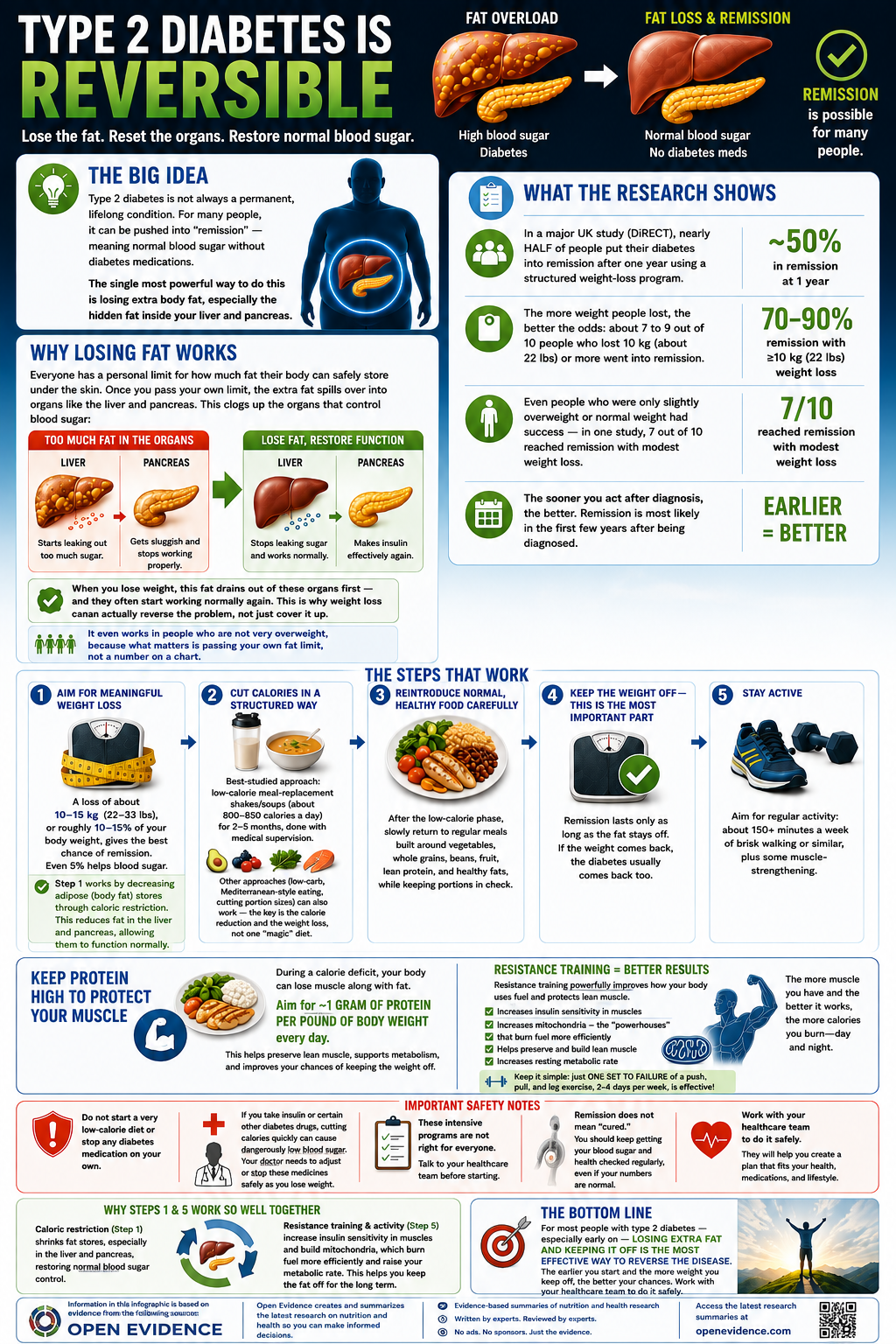
For most people with type 2 diabetes, emptying the extra fuel — especially fat in the liver and pancreas — can bring blood sugar back down.
For most people with type 2 diabetes, this is reversible to some extent. Remission means normal blood sugar without diabetes medications. Lose the fat inside the liver and pancreas, and the organs can start working again.
We decrease fat stores through caloric restriction. Calories below maintenance. How many do I need to be below maintenance? Go back here That is emptying the fuel tank. There is no one magic diet. Very-low-calorie shakes, low-carb, low fat, paleo, vegan, Mediterranean-style — they can all work. The common denominator is the calorie reduction and the inherent fat lost.
The important thing to remember once again is to keep protein high while you are in a deficit. About a gram per pound. This prevents the body stealing fuel from the muscle itself out of desperation. Our body still thinks it is 10,000 BC and doesn’t know there’s a Walmart and eight McDonald’s around the corner. It thinks we might starve tomorrow, and muscle uses a lot more energy than fat at rest. If you are not using your muscles or feeding the muscles, it will dispense with the muscles.
So: losing excess fat, especially belly fat, is the single most powerful change you can make. Keep and build muscle with resistance work. Do both. If you have to prioritize, reducing fat has the biggest payoff. The number on the scale is not the whole story. Where the fat is stored matters more.
Resistance training of some kind. It increases insulin sensitivity in the muscle. It increases mitochondria — the powerhouses that burn the fuel — and it raises metabolic rate. You do not need a 90-minute bro session unless that flaps your jacks. Bare bones: at least one set to failure of a push, a pull, and a leg. Two to four days a week is enough to count.
Walk. 10,000 steps a day, or more. Not glamorous. It burns fuel, and it is the activity most people will actually do on a work week.
Medications can aid this. GLP-1s, metformin, the rest of the toolbox. If we are keeping it simple, the bare-bones approach is: calories below maintenance, protein high in the deficit, walk, lift a little. Do not start a crash diet or stop insulin or other diabetes medication on your own. Blood sugar can drop fast. Work with your clinician so the meds come down as the tank empties, not as a surprise.
Remission is not the same as cured. Keep the fat off and it tends to stay gone. The overflow comes back and so does the diabetes.
I hope to offer consultations in the future and be a part of this process for patients. I am not able to provide that yet.
Why we keep protein high in a deficit So the machine still has parts.
General education, not a personal treatment plan. If you have a medical condition — kidneys, pregnancy, disordered eating, anything your clinician is already following — talk with them before you overhaul how you eat.