
15
Understanding Cholesterol
Reference: Open Evidence; 2026 ACC/AHA Dyslipidemia Guideline
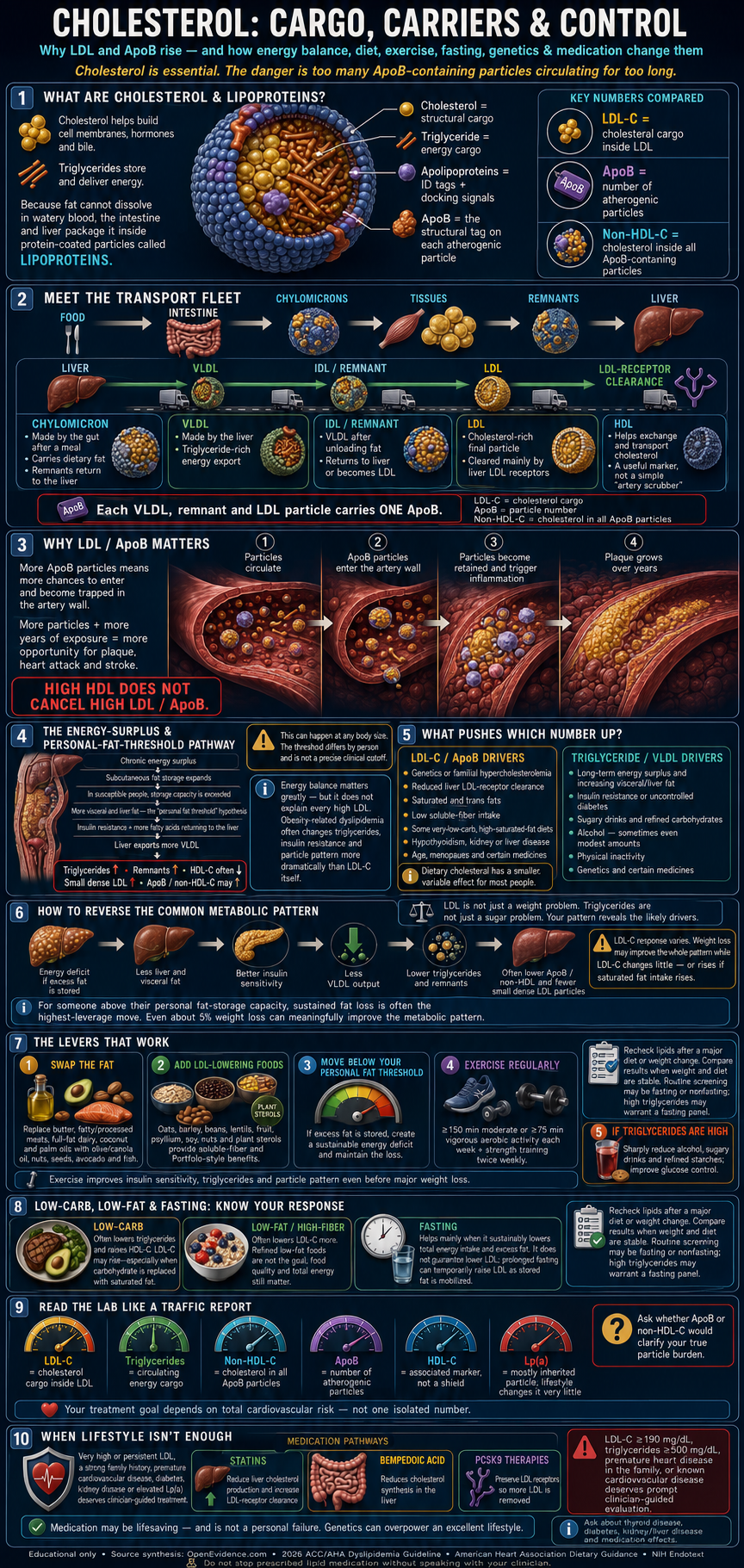
Cholesterol is essential. The danger is too many ApoB-containing particles circulating for too long.
TL;DR version
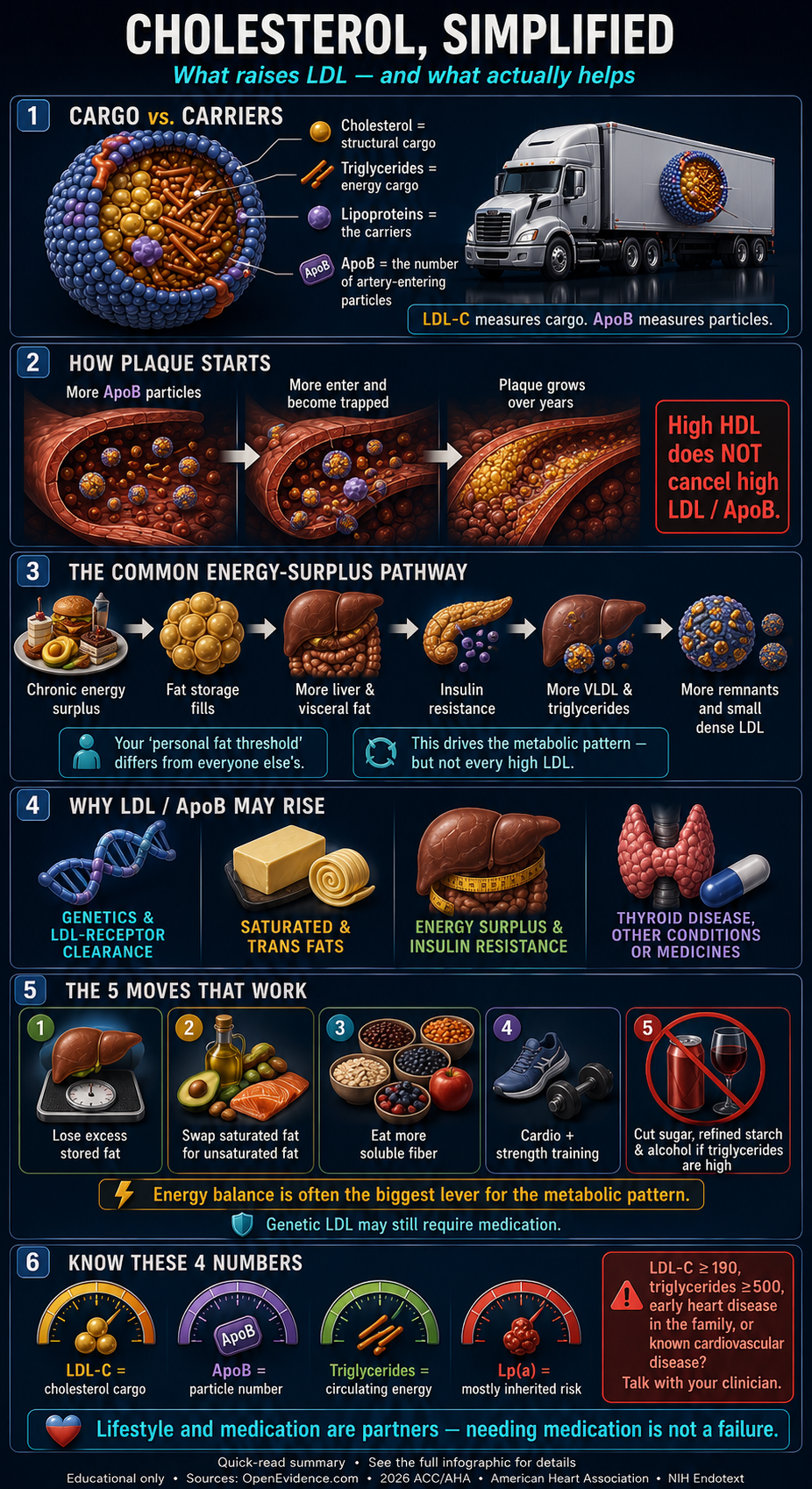
Cholesterol is cargo. Lipoproteins are the trucks. ApoB is the ID tag on every atherogenic particle — each VLDL, remnant, and LDL carries one. LDL-C is how much cholesterol is inside LDL. ApoB is how many of those particles you have. Non-HDL-C is the cholesterol inside all ApoB particles.
More ApoB particles for more years means more chances to enter the artery wall, get stuck, and build plaque. High HDL does not cancel high LDL or ApoB.
Energy surplus past your personal fat threshold, saturated fat, genetics, and inactivity all push the numbers. If extra fat is stored, a sustained calorie deficit is often the highest-leverage move — even about 5% weight loss can improve the pattern.
Levers that work: swap butter and processed fats for olive oil, avocado, nuts, and fish; add oats, barley, beans, and plant sterols; get below your personal fat threshold; and exercise. Low-carb, low-fat, and fasting each change the labs differently. Recheck lipids after a major diet or weight change.
Lifestyle is first. Medication is not a personal failure — genetics can overpower an excellent lifestyle. Treatment goals depend on total cardiovascular risk, not one isolated number. Do not stop prescribed lipid medication without speaking with your clinician.
The full nerdy nerd version for nerds like me
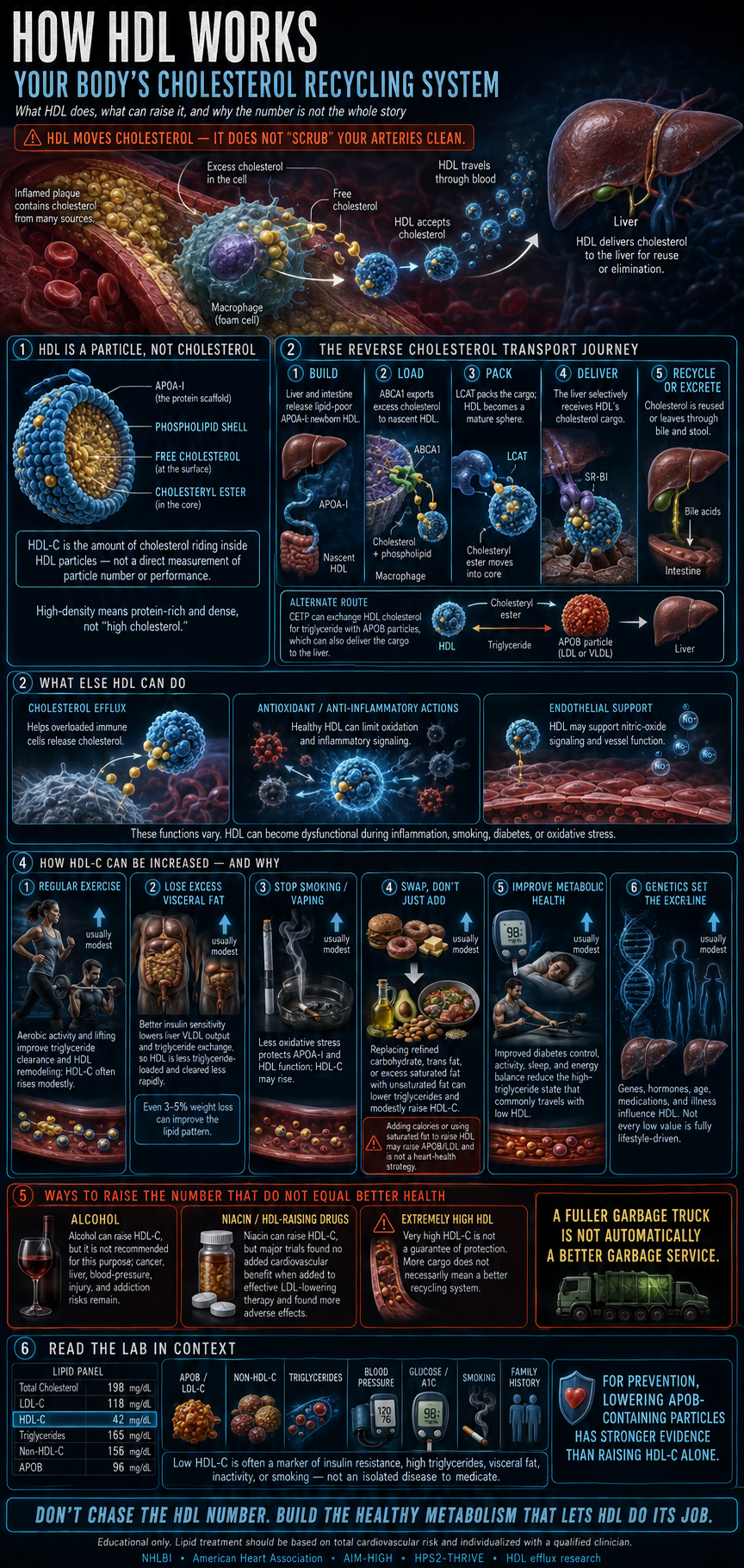
A deeper dive into HDL
What actually causes type 2 diabetes The same overflow story, from a blood-sugar angle.
General education, not a personal treatment plan. If you have a medical condition — kidneys, pregnancy, disordered eating, anything your clinician is already following — talk with them before you overhaul how you eat.