
07
How does my body decide which fuel?
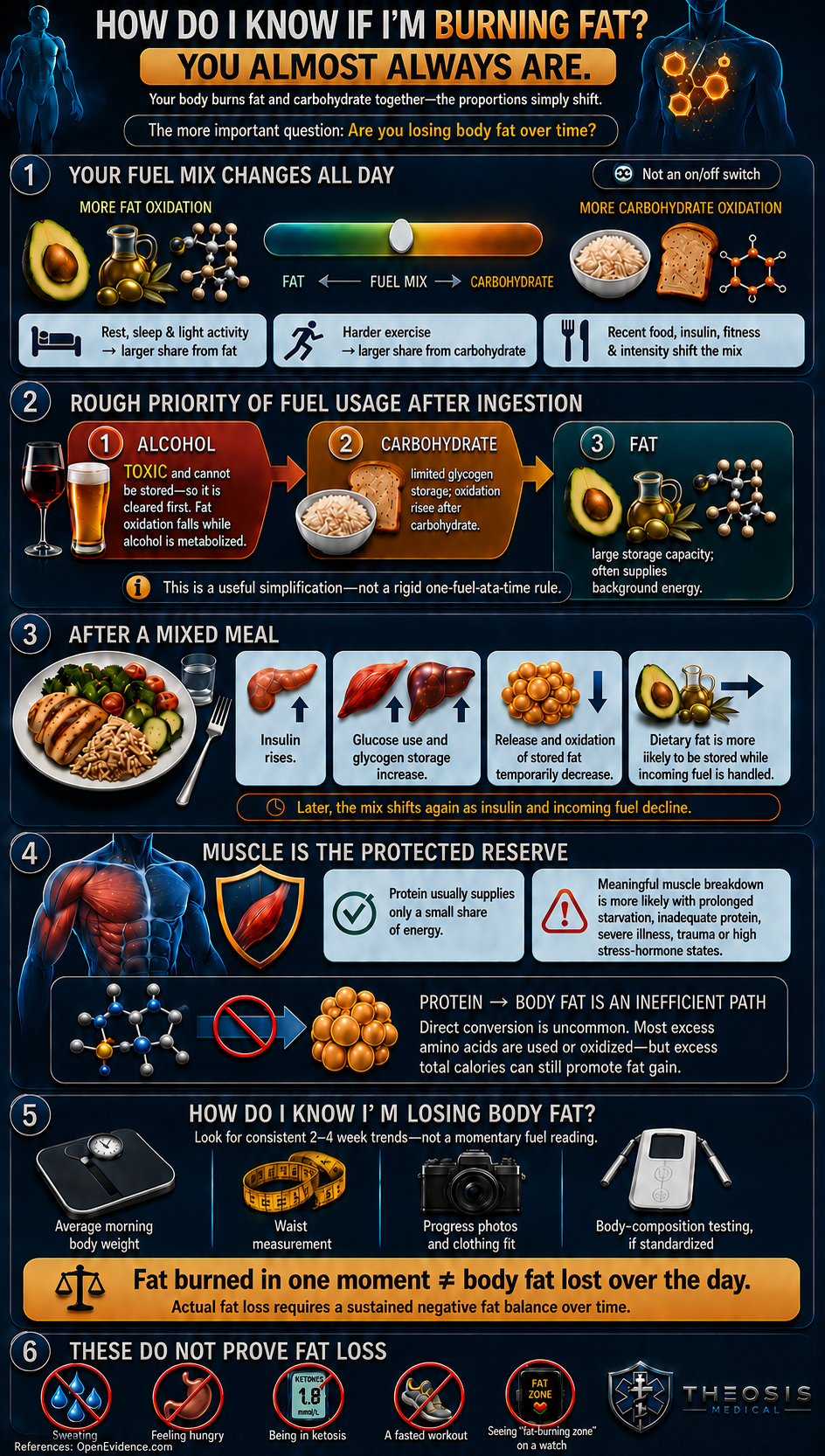
You are almost always burning fat. The mix shifts all day. A moment of fat-burn is not the same as losing body fat.
The freshman fifteen that so commonly occurs that first year of college is attributable to many concepts below. As we are fasting overnight we are mostly using fat stores for fuel, since insulin is low and we are very inactive.
If this night of sleep occurred in a tent in the Rockies and we were woken up by a bear and suddenly running for our lives, the fuel of choice would shift to glycogen (stored glucose).
If we survived this ordeal and found the nearest Irish pub and had a few rounds of whiskey and beer to celebrate, followed by a big plate of Irish nachos and a Paddy Burger, now we shift gears in metabolism.
If it was just the food, we’d shut down fat burning and start fat storing and focusing on burning the carbs from the meal. We have limited carb storage so we focus on that first. Adding the booze — which is metabolized to the ol’ acetaldehyde, a.k.a. poison — goes right to the top of the priority list to clear from the body. Now even the carbs might turn to fat if glycogen stores are full.
As the alcohol is cleared and the carbohydrates are stored in muscle and liver, all the fat that was in that meal is now on the hips. You can see how this process, repeated over a couple of semesters, can create a new experience on the scale by the time you say sophomore year.
Basically we burn fuel based on how easy we store it, how toxic it is to us, and how quickly we can use it — and this is constantly in flux based on what is happening in the moment, as noted above.
Still, if all those different fuels and the calories tied to them add up to a number that is less than what we need for the day, we will eventually get to a point where we use fat to fill in the gap, and we will burn off the fat from the hips that just got stored there earlier — and then some.
See below for pretty pictures to summarize this neat dance that occurs in the body.
General education, not a personal treatment plan. If you have a medical condition — kidneys, pregnancy, disordered eating, anything your clinician is already following — talk with them before you overhaul how you eat.