
09
Intermittent Fasting Hacks
Different clocks. Same idea: a window you can actually keep.
Another tool in the toolbelt of trying to live a healthful life in the midst of a chaotic one, is fasting. Contrary to what you might think, I have found this to be the easiest hack to adopt and maintain for over 15 years.
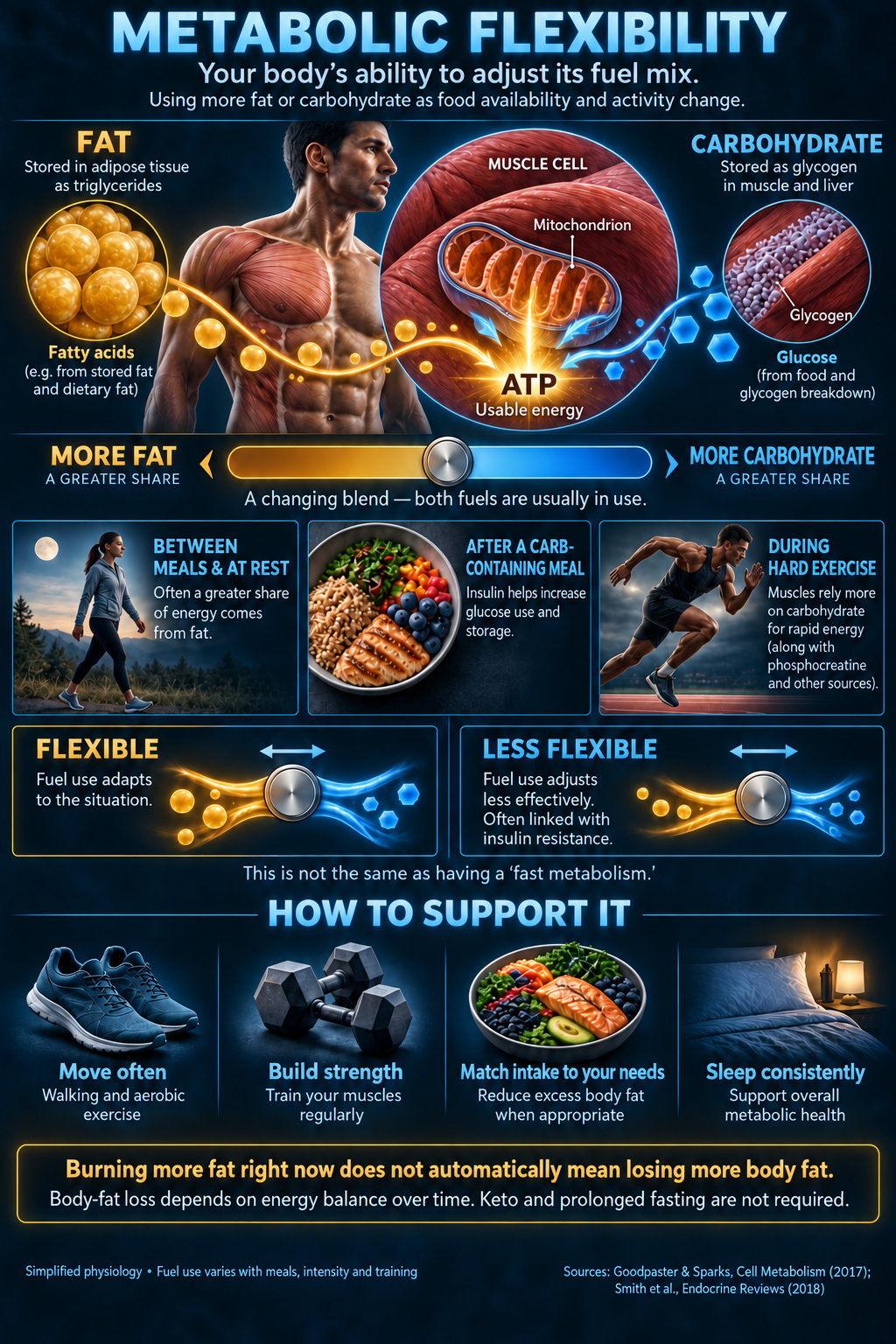
At first it may seem a bit tough if you are used to eating all throughout the day, but even just starting by skipping breakfast and eating lunch as your first meal will improve your metabolic flexibility.
What is metabolic flexibility you might ask? This is the ability to seamlessly switch to fat burning when we haven't eaten in a while and to go back and forth between fat and carbs for fuel without feeling hangry or fatigued.
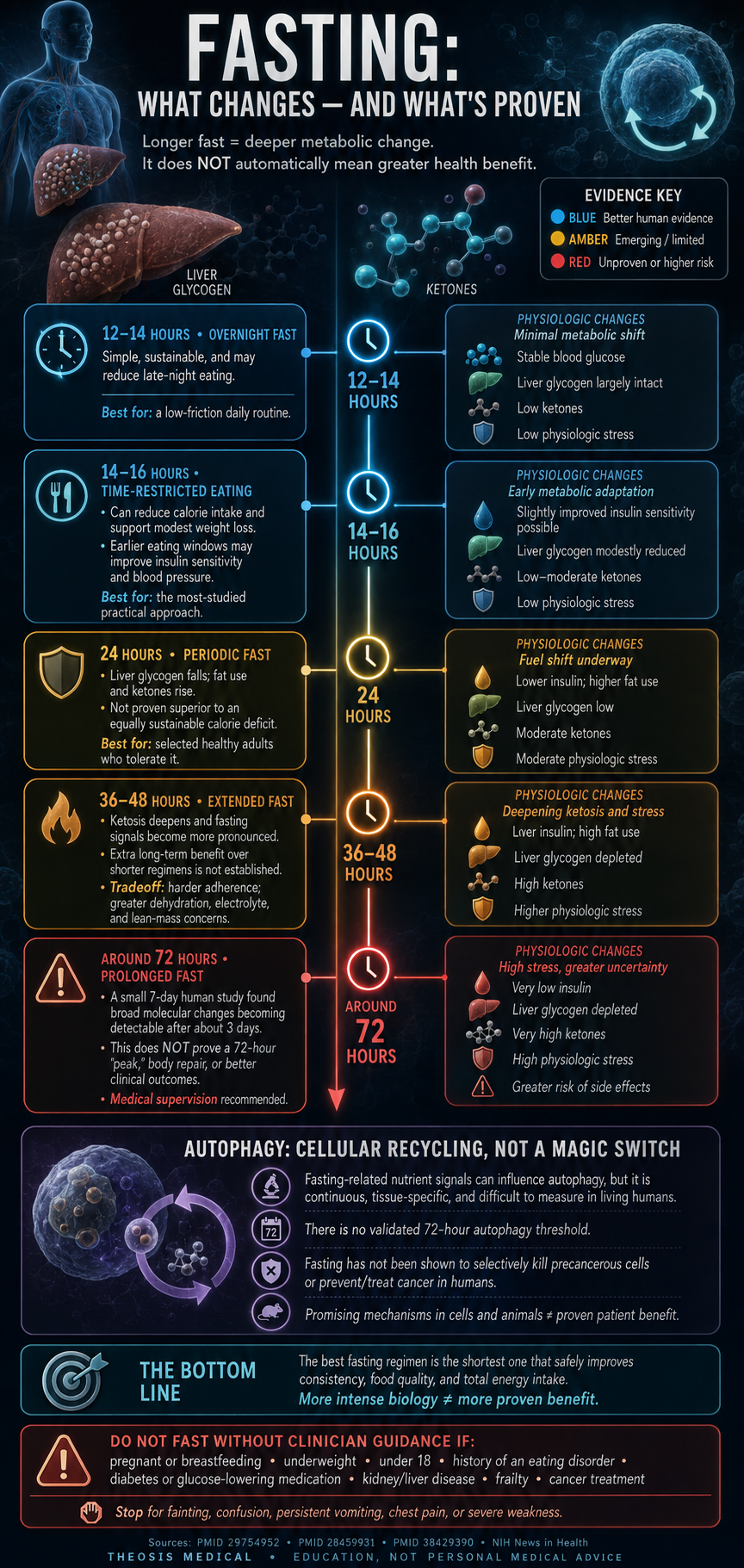
Intermittent fasting is not one diet. It is a family of eating windows. 16:8, 18:6, OMAD, 5:2, alternate-day — they all shrink the hours (or the days) you eat. The style is a tool. The deficit is still the point.
I am going to walk through the main styles here so you can see what they actually look like on a Tuesday, not just on an infographic. Pick the one that fits a shift, a hotel breakfast, or a house full of kids. If it does not fit real life, it is not your hack.
Protein still comes first inside the window. Water, coffee, unsweetened tea outside it. This is not a medical protocol, and it is not for everyone — pregnancy, a history of disordered eating, some diabetes meds, and a few other situations mean you talk to your own clinician first.
The styles
This is the menu of styles. Each one will get its own write-up — what a Tuesday looks like, who it actually fits, and how to keep protein from falling off a cliff. For now, pick the clock. The rest is coming.
16:8
16 hours off · 8 hours on
The default. Skip breakfast or skip late night. Eat in an eight-hour window.
18:6
18 hours off · 6 hours on
Tighter window. Two meals, maybe a snack. Still a Tuesday, not a monastery.
20:4
20 hours off · 4 hours on
One long gap, one short eating block. Easy to under-eat protein if you are not paying attention.
OMAD
One meal a day
The whole day’s food in one sitting. High protein still has to fit on that plate.
5:2
Five normal days · two low-calorie days
You do not shrink every day’s window. Two days a week you eat a lot less.
Alternate-day
Eat · fast · eat · fast
Every other day is the fast. The eat days still need protein and a plan.
Eat-stop-eat
One 24-hour fast, 1–2× a week
Dinner to dinner. The other days look normal.
Circadian / early window
Eat earlier, stop earlier
Push the window toward daylight. Finish dinner, then stop.
PSMF
Protein-sparing modified fast
Not a clock. A short, aggressive fat-loss phase: high protein, very low carb, very low added fat. Example below.
Credit where it is due: 16:8 comes from Lean Gains. Eat Stop Eat is Brad Pilon's. I did not invent these protocols — I am the middleman.
An example
Protein-sparing modified fast
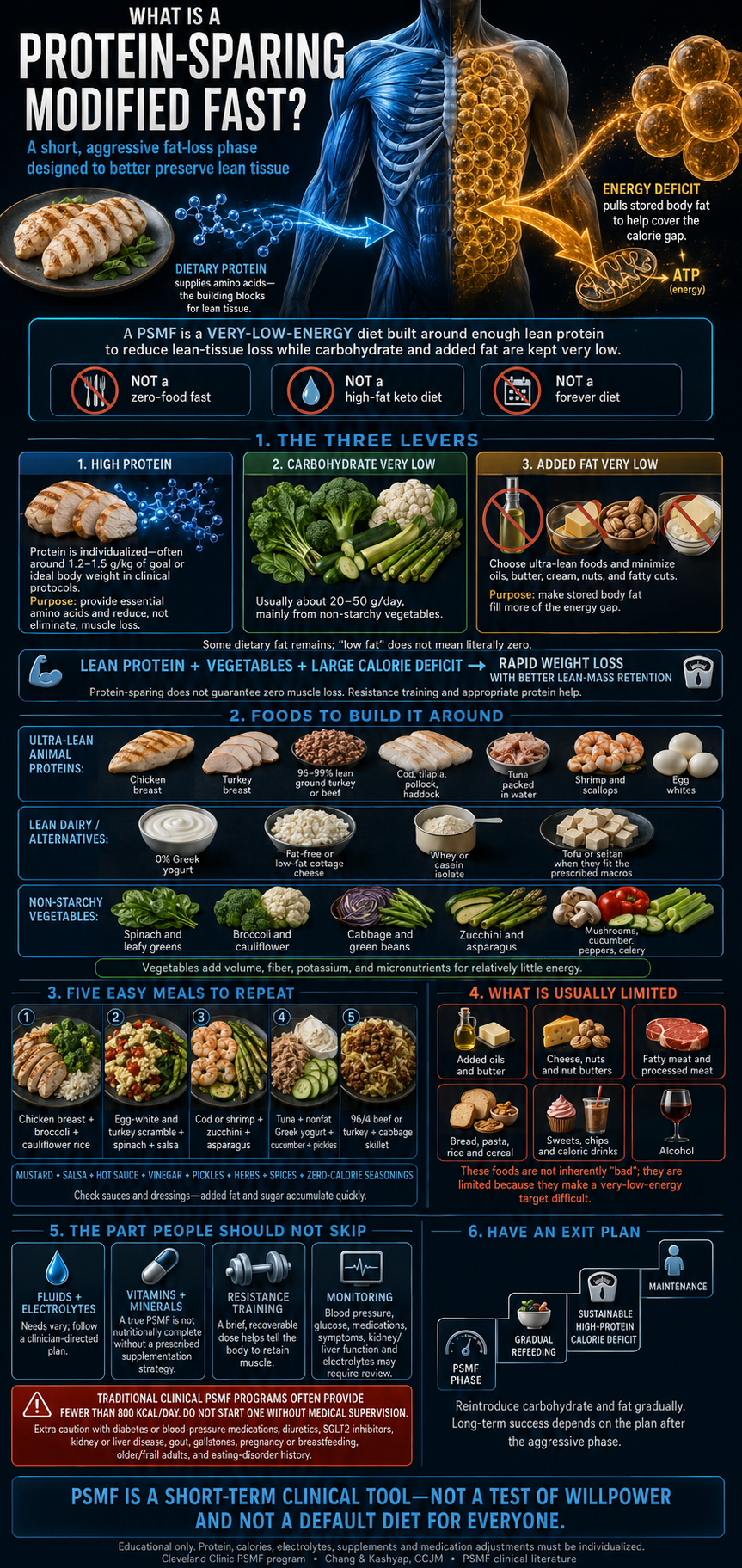
The styles above shrink the hours you eat. A protein-sparing modified fast shrinks the calories hard while trying not to eat your own muscle to do it.
It is a very-low-energy phase built around lean protein. Carbohydrate and added fat stay very low on purpose, so more of the energy gap has to come from stored body fat. That is the “modified” part. You are still eating. This is not a water fast, and it is not high-fat keto.
Three levers: enough protein to spare lean tissue, carbs mostly from non-starchy vegetables, and almost no oils, butter, nuts, or fatty cuts. Repeatable meals look boring on purpose — chicken and broccoli, egg-white scramble, tuna and nonfat yogurt, extra-lean beef with cabbage. Season with mustard, salsa, vinegar, pickles, herbs. The sauces are where this dies.
Protein-sparing is the goal, not a guarantee. Resistance training and enough protein help. Fluids, electrolytes, and an exit plan are not optional. Traditional clinical programs can run under 800 calories a day. Do not start one of those without medical supervision. Diabetes medications, diuretics, SGLT2 inhibitors, kidney or liver disease, gout, gallstones, pregnancy, breastfeeding, older or frail adults, and a history of disordered eating are all reasons this is not a DIY project.
This is a short-term tool. It is not a personality, and it is not the diet you live on after the fat comes off. Refeed. Then a sustainable high-protein deficit. Then maintenance.
General education, not a personal treatment plan. If you have a medical condition — kidneys, pregnancy, disordered eating, anything your clinician is already following — talk with them before you overhaul how you eat.