
07
Sepsis: When the Body's Defenses Turn Destructive
It is not just a bad infection. Severity varies — and it can quickly become an emergency.
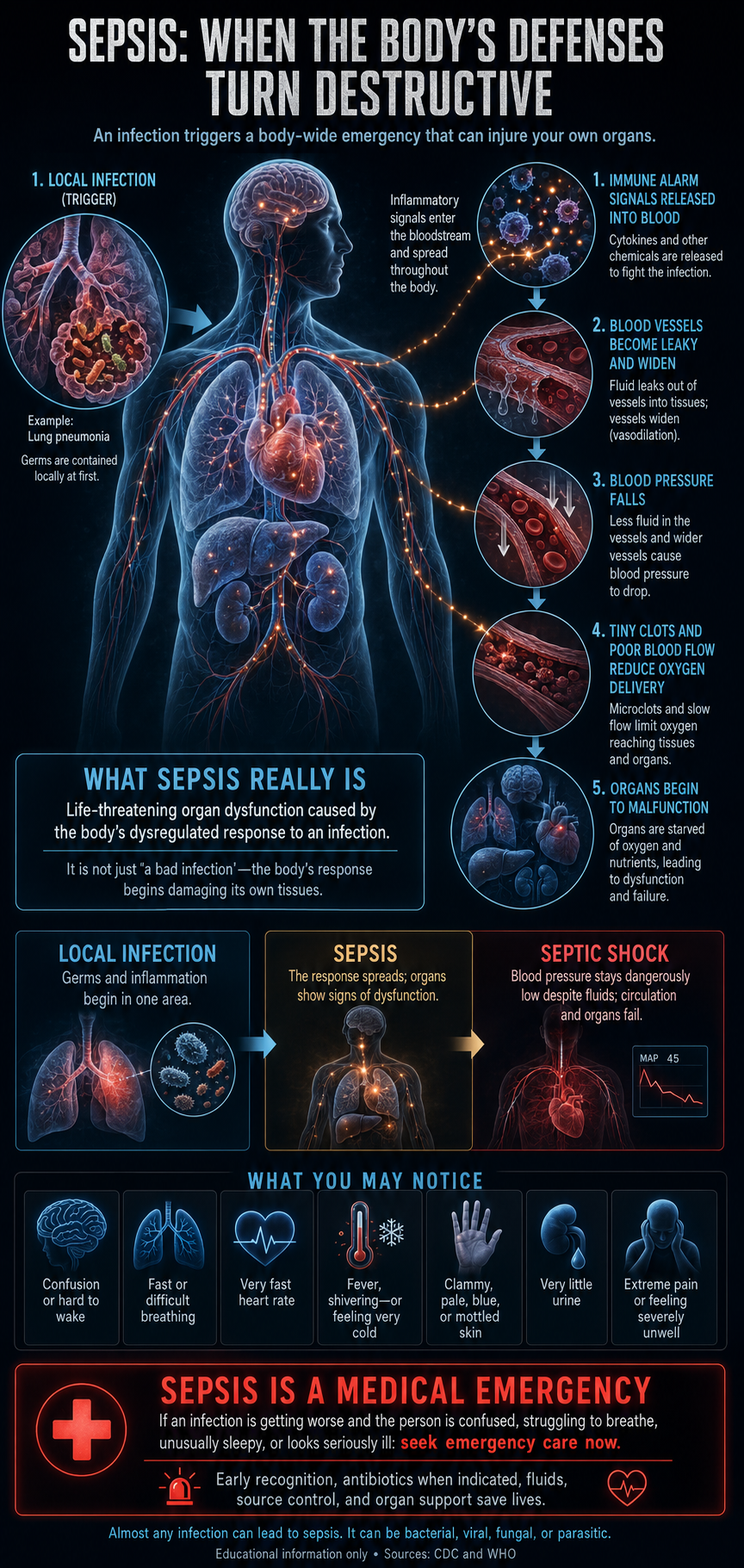
An infection usually starts in one place — a lung, a kidney, a wound, the belly. Most of the time the immune system contains it. Sepsis is what happens when that response stops being local and starts injuring the rest of you. Blood vessels leak and widen, blood pressure falls, tiny clots slow oxygen delivery, and organs begin to fail. It is not “a really bad cold.” It is organ dysfunction from a dysregulated response to infection.
There are degrees of severity. Some people are caught early and turn around with treatment. Septic shock is the far end: blood pressure stays dangerously low even after fluids, and circulation and organs fail. Almost any infection can lead here — bacterial, viral, fungal, or parasitic. You cannot diagnose it from a phone. You can notice when someone with an infection is getting worse in a way that is not ordinary — and that change can happen fast.
What you may notice: confusion or hard to wake, fast or difficult breathing, a very fast heart rate, fever or shivering — or feeling very cold — clammy, pale, blue, or mottled skin, very little urine, extreme pain, or looking seriously unwell.
If an infection is getting worse and the person is confused, struggling to breathe, unusually sleepy, or looks seriously ill: seek emergency care now. Early recognition, antibiotics when indicated, fluids, source control, and organ support save lives. Do not wait it out overnight if that picture is unfolding.
General education only — not a substitute for advice from your healthcare provider. When in doubt, get examined.