
02
Understanding Low Back Pain
What's going on underneath it all and when to worry.
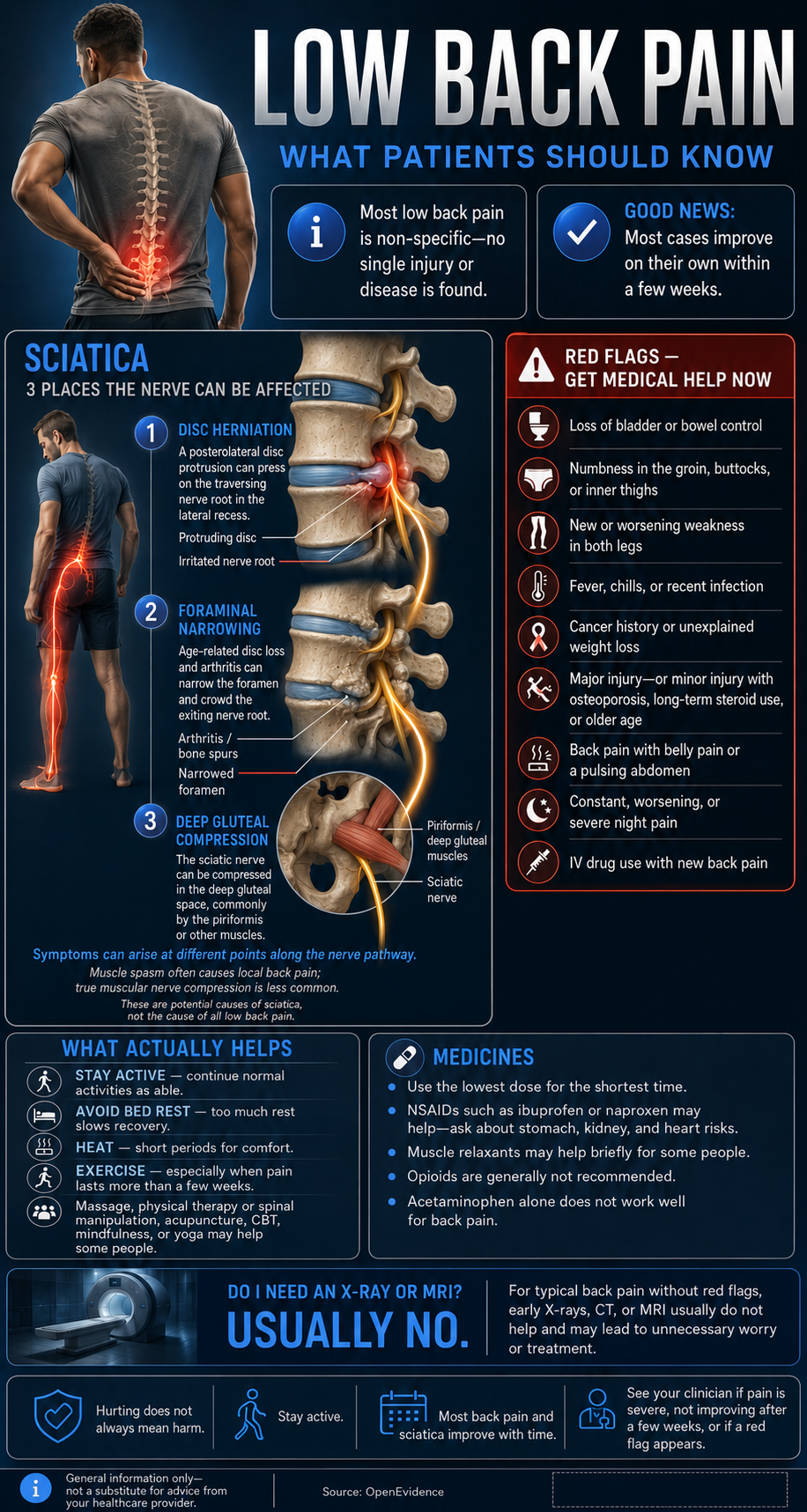
We often do not find a single injury or disease that explains it. Muscle spasm is a common reason the back hurts. True nerve compression — disc, bony narrowing, or deep gluteal muscles irritating the sciatic nerve — is less common than people think, and it is not the cause of all low back pain.
What actually helps: stay active as you are able. Avoid bed rest. Heat for comfort. Exercise if it lasts more than a few weeks. NSAIDs at the lowest dose for the shortest time may help; acetaminophen alone usually does not. Opioids are generally not recommended.
For typical back pain without red flags, early X-ray, CT, or MRI usually does not help and can lead to extra worry or treatment. Get seen now for loss of bladder or bowel control, numbness in the groin or inner thighs, new weakness in both legs, fever, cancer history or unexplained weight loss, a major injury, back pain with belly pain or a pulsing abdomen, severe night pain, or IV drug use with new back pain. See your clinician if pain is severe, not improving after a few weeks, or a red flag appears.
General education only — not a substitute for advice from your healthcare provider. When in doubt, get examined.