
08
How Do Antibiotics Work
Can't I just take some leftover amoxicillin when I get sick? That'll take care of it, right?
Extra nerdy. A resource for medical professionals.
Not quite. Antibiotics are not a general “sick pill.” They work in different ways depending on the type of bacteria — and most of what makes you sick is not bacteria at all.
Before leftover amoxicillin is the right move, three things have to be true.
1. It is truly bacterial. Most of the time it isn’t. Colds, most bronchitis, most sore throats, most sinus pressure — viruses. Amoxicillin does nothing to a virus except wave as it drives by on its way to your colon to see if it’s in the mood for diarrhea.
2. If it is bacterial, we have to infer what kind. Strep is not E. coli is not MRSA is not an atypical pneumonia. The leftover amoxicillin in the cabinet was chosen for a different bug, in a different place, on a different day.
3. That bug has to actually be susceptible to the drug you are considering. Coverage, resistance, and whether the drug even reaches the infection all matter. A pill that stays in the gut will not treat a kidney. Some drugs never treat pneumonia, no matter what the bottle says.
That is why leftover antibiotics are a bad plan even when you mean well. Get examined when you need one. Here is the simple version of how these medicines actually work.
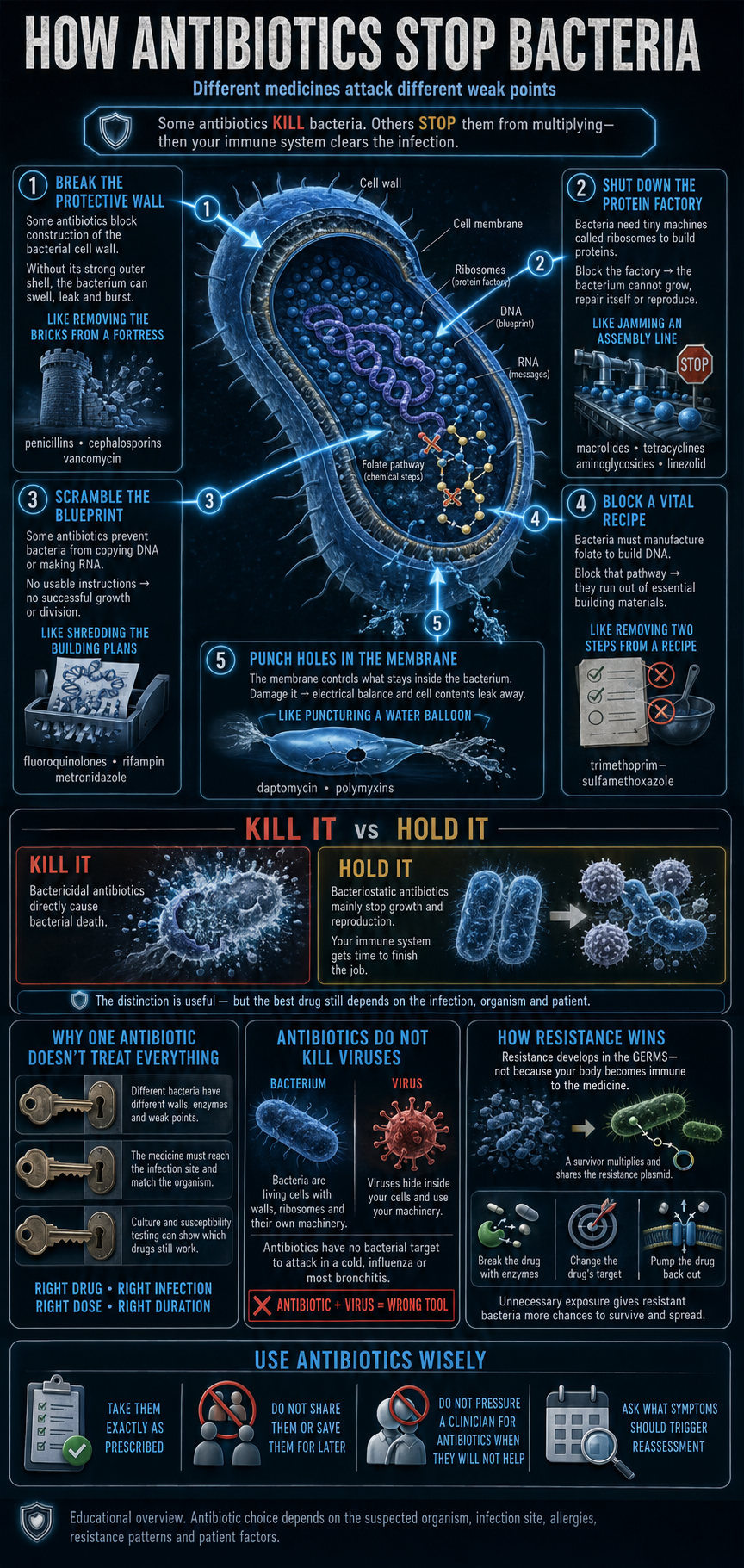
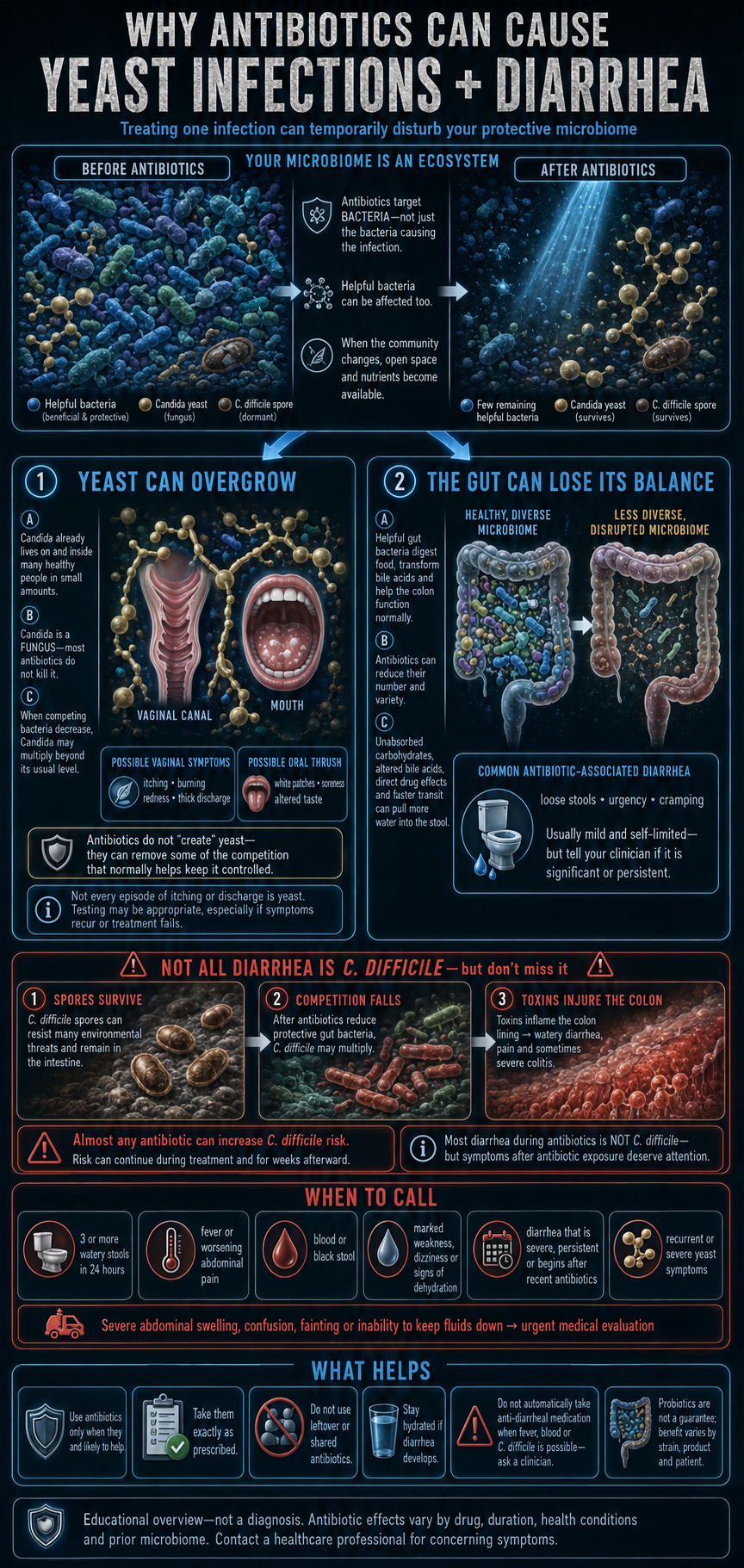
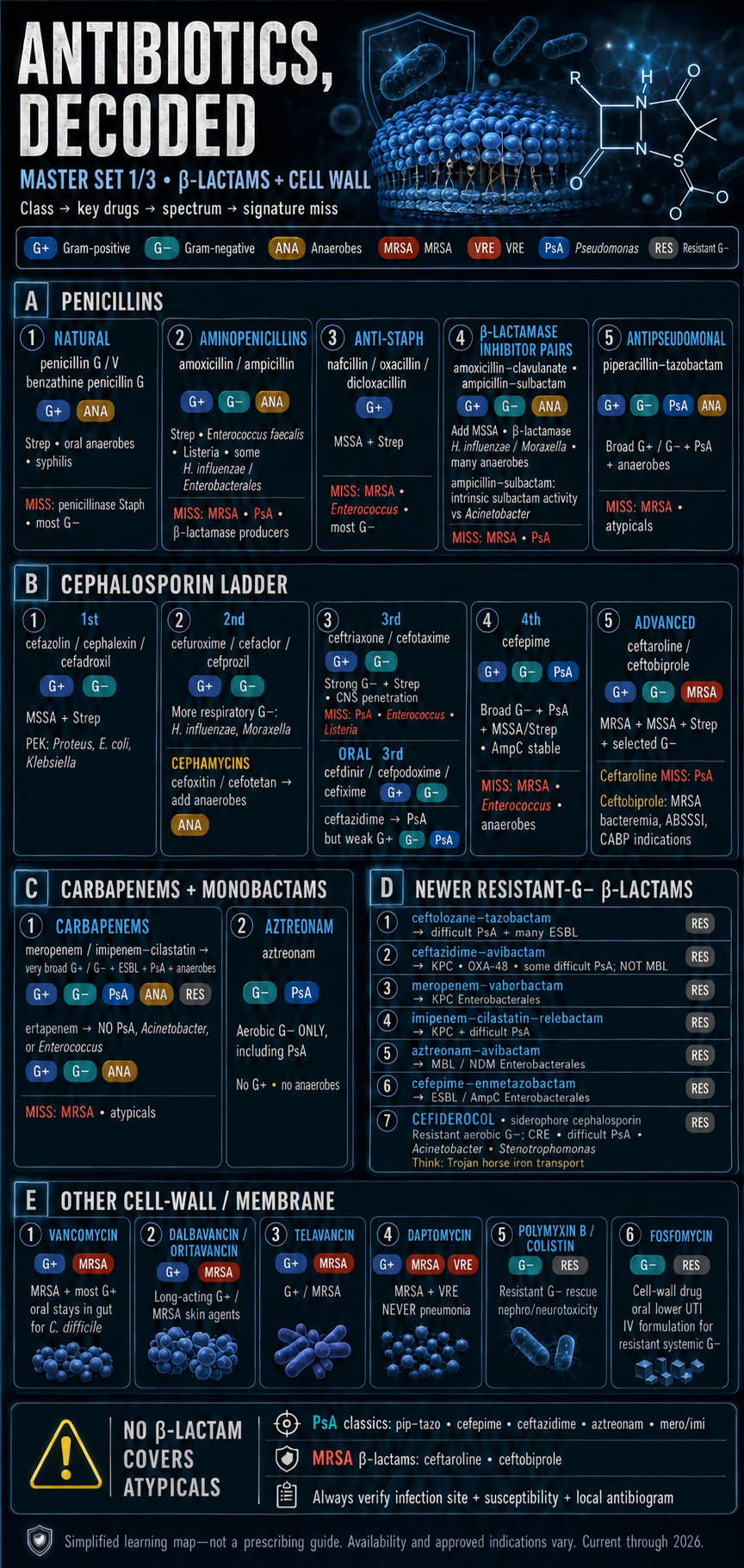
The three maps that follow are denser. They are more for medical professionals — or the committed Dr. Googlers — as a refresher on the coverage of each antibiotic: what it hits, what it misses, and where people get into trouble. They are not a home prescribing guide.
01 of 03
β-Lactams + cell wall
Master set 1 of 3 — class, key drugs, spectrum, signature miss
General education only — not a substitute for advice from your healthcare provider. When in doubt, get examined.