
03
Fever: Your Body's Secret Weapon...
...and why it's usually not dangerous.
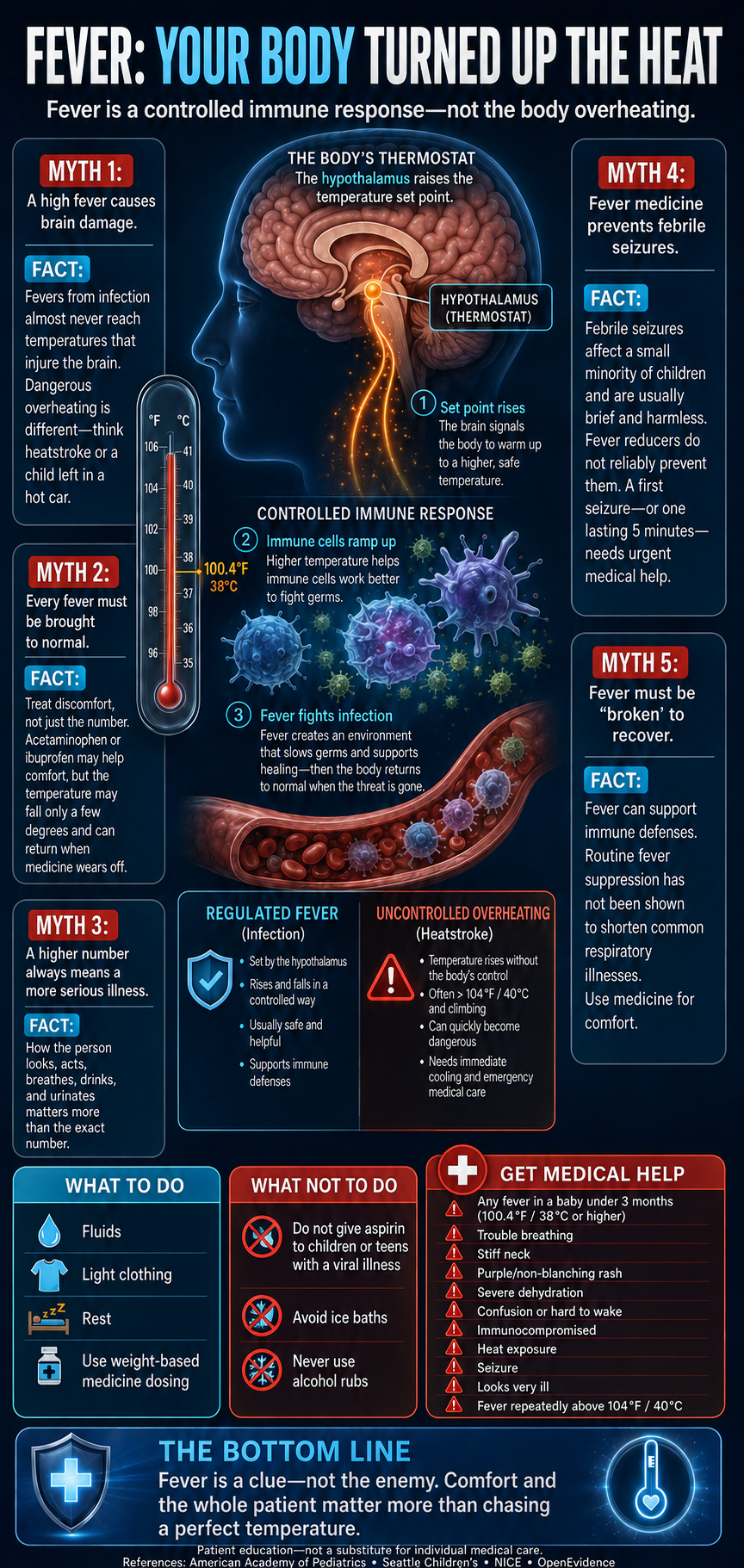
The hypothalamus is the thermostat. In an infection it raises the set point on purpose. Immune cells work better at that higher temperature. The body is not broken. It turned the heat up.
A high fever from infection almost never reaches temperatures that injure the brain. Dangerous overheating is a different problem — heatstroke, or a child left in a hot car. How the person looks, acts, breathes, drinks, and urinates matters more than the exact number on the thermometer.
You do not have to chase a normal temperature. Treat discomfort. Acetaminophen or ibuprofen can help comfort; the number may only drop a few degrees and can rise again when the medicine wears off. Fever medicine does not reliably prevent febrile seizures. Routine fever suppression has not been shown to shorten common respiratory illnesses.
Fluids, light clothing, rest, and weight-based dosing. Do not give aspirin to children or teens with a viral illness. Avoid ice baths and alcohol rubs.
Get medical help for any fever in a baby under 3 months, trouble breathing, a stiff neck, a purple or non-blanching rash, severe dehydration, confusion or hard to wake, a first seizure or one lasting 5 minutes, looking very ill, heat exposure, or fever repeatedly above 104°F / 40°C.
General education only — not a substitute for advice from your healthcare provider. When in doubt, get examined.